Flown
Long March 2C | Satellite for Earth Observation (SEO)
China Aerospace Science and Technology Corporation · Long March 2C
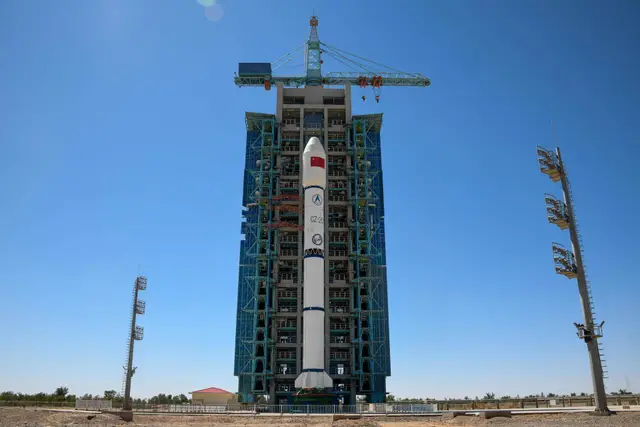
The launch vehicle successfully inserted its payload(s) into the target orbit(s).
Launch window 02:53–03:17 UTC.
The mission
Satellite for Earth Observation (SEO) is an Earth observation satellite project of the United Arab Emirates (UAE) by the National Space Science and Technology Center (NSSTC) at the United Arab Emirates University. The SEO mission aims to develop advanced space technologies and represents an ambitious step toward utilizing space technologies to support sustainability and future development, including giving Emirati talent hands-on experiences in various stages of satellite development and operations including ground station facilities, assembly, integration, and testing (AIT) capabilities. The mission seeks to provide data and insights that contribute to environmental protection, natural resource management, and enhanced planning and decision-making efficiency.
Vehicle and site
- Rocket
- Long March 2C
- Family
- Long March
- Mission
- Satellite for Earth Observation (SEO)
- Mission type
- Earth Science
- Pad
- Launch Complex 9
- Location
- Taiyuan Satellite Launch Center, People's Republic of China
- Coordinates
- 38.8631°, 111.5896°
The Long March 2C is a family of expendable launch vehicles made and operated by China. It is a two stage launch vehicle with storable propellants, consisting of Nitrogen Tetroxide and Unsymmetrical Dimethylhydrazine.
China Aerospace Science and Technology Corporation
The China Aerospace Science and Technology Corporation (CASC) is the main contractor for the Chinese space program. It is state-owned and has a number of subordinate entities which design, develop and manufacture a range of spacecraft, launch vehicles, strategic and tactical missile systems, and ground equipment. It was officially established in July 1999 as part of a Chinese government reform drive, having previously been one part of the former China Aerospace Corporation. Various incarnations of the program date back to 1956.
- Launches to date
- 611
- Successful
- 595
- Failed
- 16
- Consecutive successes
- 2
Schedule from Launch Library 2, rebuilt hourly. Dates slip: a time given to the minute is a target, not a promise, and this page reflects the schedule as it stood at the last build. All upcoming launches.